Fares and sukli: how it works
The Diesel n' Steel fare loop explained: base fare, the four-barangay rule, regular and discounted passengers, sukli arithmetic and pabarya at sari-sari stores.
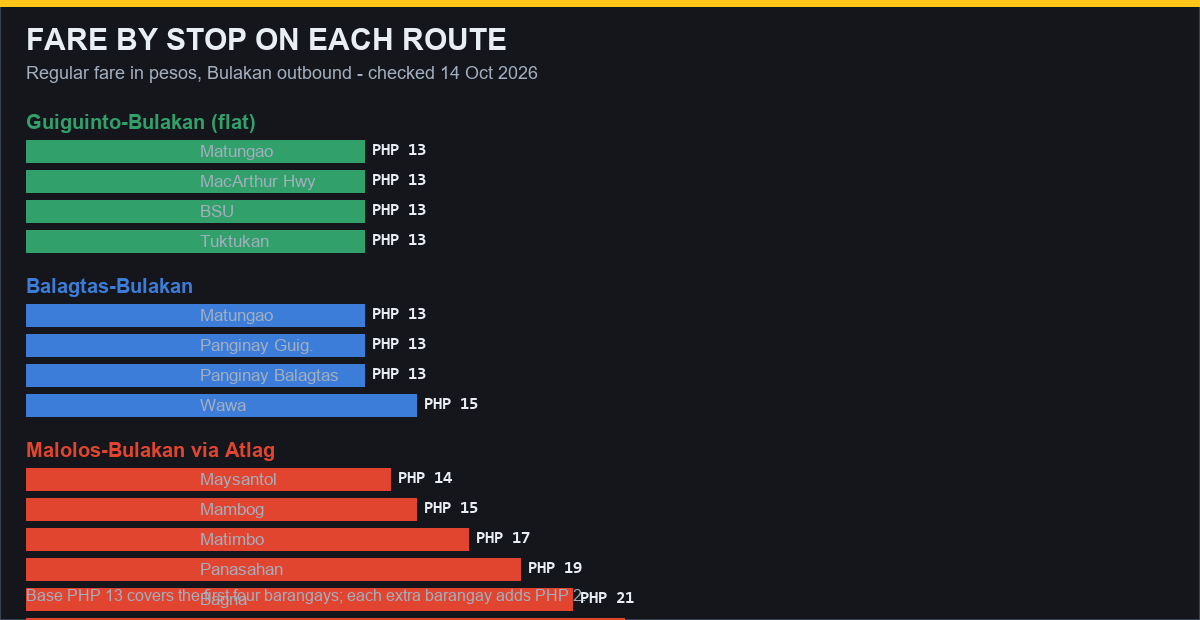
The base fare is PHP 13 for the first four barangays, then PHP 2 for each barangay after that. Students and seniors pay PHP 2 less. Wrong sukli costs 1 EXP, so read the fare and the tendered cash before you hand anything back.
Fares in Diesel n' Steel are calculated from the passenger's destination, not from where they boarded. The standard fare starts at PHP 13 and covers the first four barangays. Every barangay past the fourth adds PHP 2. Students and senior citizens pay PHP 2 less than the regular figure at every stop.
That is the whole system. It is short because the game wants you doing arithmetic at the wheel while competing for a terminal slot, and it punishes getting it wrong: every incorrect sukli takes 1 EXP off your total.
The two rules that decide every fare
| Rule | What it means at the wheel |
|---|---|
| Base fare covers four barangays | Passengers going a short distance all pay PHP 13 |
| Each extra barangay adds PHP 2 | The fifth stopping point is PHP 15, the sixth PHP 17, and so on |
| Students and seniors pay PHP 2 less | PHP 11 instead of PHP 13, PHP 13 instead of PHP 15 |
| One to five passengers per spawn | You may be collecting several fares from one group |
Regular against discounted
Every stop has two columns. The regular column is what a standard passenger pays. The discounted column is what a student or a senior citizen pays, and it is always PHP 2 lower.
| Stop on the Malolos route | Regular | Discounted |
|---|---|---|
| Maysantol, San Nicolas, Pitpitan | PHP 14 | PHP 12 |
| Mambog | PHP 15 | PHP 13 |
| Matimbo | PHP 17 | PHP 15 |
| Panasahan | PHP 19 | PHP 17 |
| Bagna | PHP 21 | PHP 19 |
| Atlag | PHP 23 | PHP 21 |
| San Juan, Sto. Rosario | PHP 25 | PHP 23 |
The discount is not a rounding trick you can ignore. Collect the regular fare from a discounted passenger and you have handed back the wrong sukli, which is the same EXP penalty as any other mistake.
Reading the fare before you take the cash
The cleanest way to run a busy jeepney is to decide the fare before any money moves:
- Look at where the passenger is getting off.
- Find that stop in the matrix for the route you are driving.
- Decide whether they are a regular or a discounted passenger.
- Say or note the fare, then take the cash they hold out.
- Subtract the fare from the cash and return the difference.
Pabarya and keeping change in the box
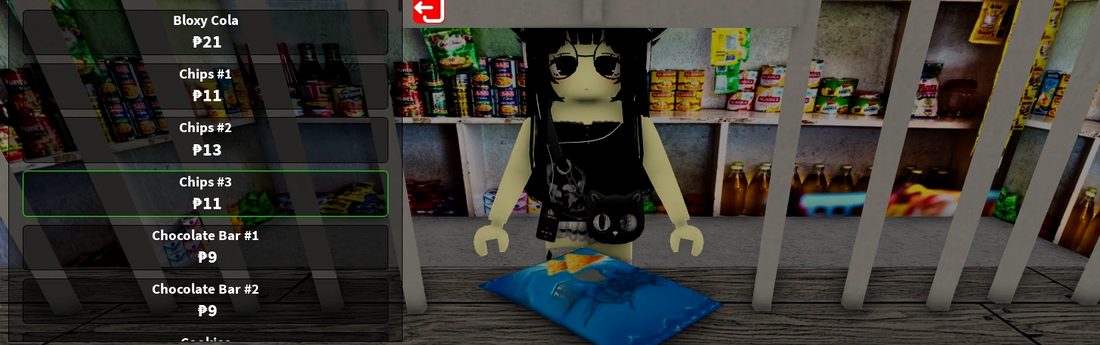
Sari-sari stores along the route run a pabarya function that exchanges money for smaller denominations. During the day the exchange limit runs from PHP 100 to PHP 1,000, and at night it shifts down to between PHP 650 and PHP 500. If you are running long shifts and running out of small notes, this is where you fix it, not by short-changing a passenger.
Where fares sit in the bigger economy
Fares are your only real income, so the fare matrix is also the money map. The Malolos route has the most fare steps and the highest top-end fare, which is why a full load on it pays several times what a full load on the Guiguinto run pays. The trade is time and fuel.
If you want to compare routes as businesses rather than as fare tables, the full comparison is in the fare matrix and the numbers per jeepney are on the every jeepney: stats and prices page.
FAQ
What is the base fare?
PHP 13, which covers the first four barangays on any route.
Do students and seniors pay less?
Yes, PHP 2 less than the regular fare at every stop. On the base fare that is PHP 11 rather than PHP 13.
What happens if I give the wrong change?
You lose 1 EXP. It is a small number that adds up badly over a session.
Does the fare change with the jeepney I drive?
No. The fare is set by the route and the passenger's stop. Only the number of seats you can sell changes.